Research Interests - David Brander
I am interested in problems in geometry in general, and also applications in architecture and design. This page is only updated occasionally, but below is a brief summary of the research that I am, or have been, actively involved in.
Integrable Geometry
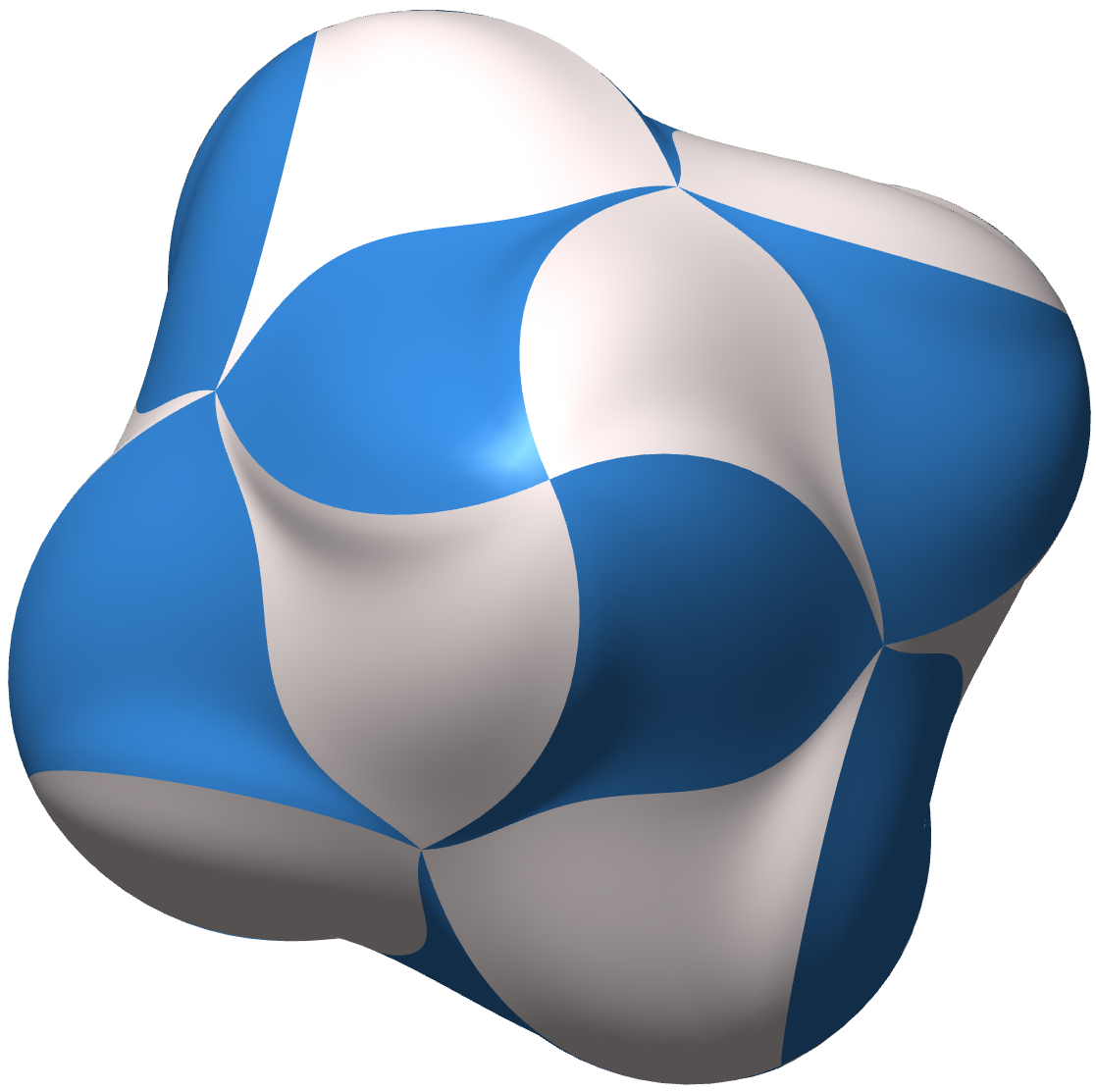
I have published a lot of work on geometric problems that are represented by special nonlinear partial differential equations called integrable systems. These problems admit exact solutions by loop group techniques, a theory that has its roots in the soliton theory that was developed from the 1960's onwards. Problems that I have worked on using these methods include isometric immersions between space forms and generalizations of these to reflective submanifolds, constant mean and Gauss curvature surfaces in various space forms, Willmore surfaces and surfaces with singularities. I have also implemented numerical methods for computing most of these surfaces. There are a few images here, with a little background on the problems they relate to.
Geometry in Architecture
I am interested in applications of geometry in archictecture and design. The development of new fabrication techniques results in the need for design and rationalization tools that allow architects to take advantage of these techniques. This leads to interesting problems in geometry. An example of this is the hot wire and hot blade fabrication technology, that I was previously involved in through the projects Bladerunner and Digital Factory, funded by the Danish Innovation Fund. This work developed techniques for cutting architectural formwork, intended to allow the construction of advanced shapes more efficiently. During 2025-2028 I am leading DTU's involvement in the EIC Pathfinder project STACK. In this project we study so-called "surface stackability" and also surfaces swept out by 3D elastic curves.
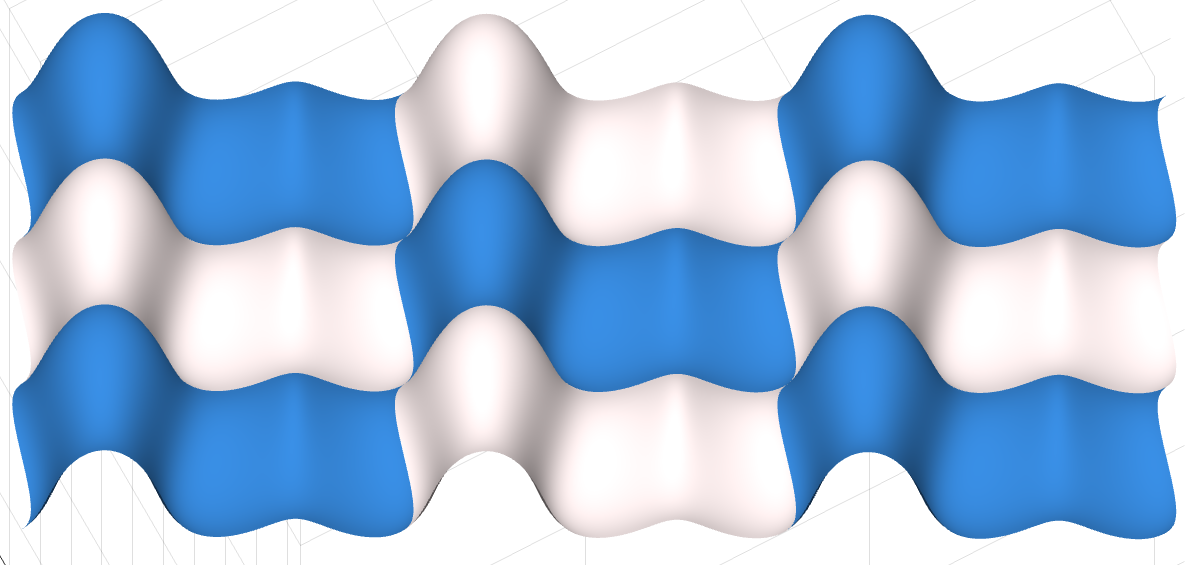
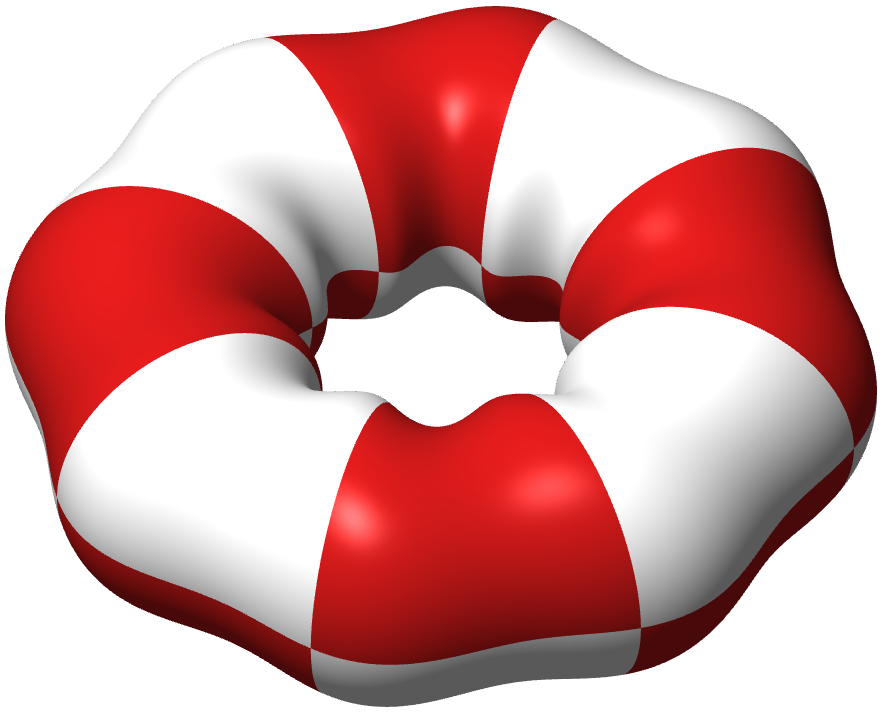
Another problem that I am interested in is smooth tileable surfaces, namely general surfaces in 3-space that admit tilings by a many copies of a single shape. I initiated the study of these surfaces in a joint work with Jens Gravesen, published here.